Take a look at the movies showing in January and February and you’ll find they divide into two distinct categories that make moviegoing a perilous proposition this time of year.
Category One is filled with the buzz movies that you’re told will win a bunch of Oscars. These are the dramas that have been making their rounds at film festivals for months, and now you’ve got your chance to finally see what the big deal is about.
With the Academy Awards just around the corner, Hollywood puts these films in cineplex to offer the masses a chance to get in on the big films before they get bigger.
Zero Dark Thirty is this year’s best example. Pre-Oscar predictions are handing all kinds of awards to this film, yet your average moviegoer hasn’t had an opportunity to see it yet. As a result, it reigned at or near the top of the slim box office take all month.
Other Oscar darlings Django Unchained, Les Miserables and Silver Linings Playbook help round out this year’s Category One showings.

Category Two is populated by the worst movies you’ll see all year. These are the films with outrageous subjects, washed up stars and unwieldy ensembles casts. They’re romantic comedy/action hybrids, second-rate superhero adaptations and eighties action movies inexplicably made in the 2010s.
Action movies are predictable, but these ones are especially so. An ex-soldier/cop/assassin/secret agent must save his family/daughter/village from young punks, and he’s determined to do it the old-fashioned way. He also won’t pass up any opportunity to remind you he’s doing it the old-fashioned way.
This January’s action crop is a great example. You’ve got Sylvester Stallone playing a geriatric action hero in Bullet to the Head, and Arnold Schwarzenegger is doing the same in The Last Stand.

Comedies this time of year tend to rely on buddy partnerships, shock humor and downward-trending stars in an attempt to capture a few box office receipts with an inferior product. Essentially, these films seduce you with successes of the past. They throw disparate ingredients together to catch as much of the demographic as they can.
Just look at the combinations.
Melissa McCarthy (Bridesmaids) and Jason Bateman (Arrested Development) in Identity Thief.
Singer Barbra Streisand and Judd Apatow mainstay Seth Rogen Guilt Trip.
Bette Midler (Beaches) and Billy Crystal (When Harry Met Sally) in Parental Guidance.
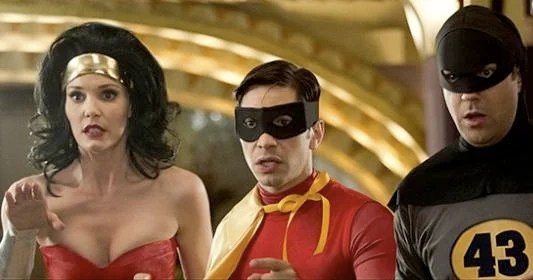
Every actor ever in Movie 43, from the writers of Dumb and Dumber and Shallow Hal.
Ignore the premises. Just look at the casts and it becomes clear: these movies were made by studio execs throwing things against the wall to see what sticks.
Hansel and Gretel: Witch Hunters is another example of focus group alchemy. Take a rising star (Jeremy Renner), a hot girl (Gemma Arterton), a trendy subject (fairy tales), and cram in as many guns, pithy one-liners and explosions as you can, and maybe audiences won’t notice the stink behind the base material.
So why do movie studios allow this to happen? They have plenty of great popcorn blockbusters for May to August, and lots of quality award-worthy films from September to December. Why don’t they save some quality for right now? Or, better yet, why make a movie like Marlon Wayans’ A Haunted House when you plan to bury this Halloween-themed movie in January?
The answers are sad but simple.
For the Category One movies, the best writing and acting comes late in the year because Academy voters have a short attention span. If you want an Oscar, you need to be fresh in everyone’s minds, and you need the time to campaign with people to promote yourself. A lot of glad-handing and self-promotion goes into winning an Oscar, and if you can debut a great November movie and then bring all the premiere attendees to your mansion for an unforgettable party, you’re far more likely to get those votes.
As for those Category Two stinkers?
Well, mediocrity breeds mediocrity.
Most people who achieve a moderate degree of success will get another shot in Hollywood because they are a proven commodity. A studio puts millions of dollars into getting a movie made; it wants to see a track record before it invests, and Hollywood isn’t full of Spielbergs and Tarantinos. If a movie exec can drop $25 million on a dumb comedy and earn back $40 million, that’s a job well done.
The problem is, sometimes that $25 million buys you a $10 million stinker.
Let’s go back to A Haunted House.

The Wayans brothers had success decades ago with In Living Color. It was funny enough to spark Jim Carrey’s career and bought the Wayans enough leeway to make the bad Scary Movie films. Those movies did moderately well because they had good trailers, trendy stars and a handful of funny jokes. It made sense, therefore, to let them make A Haunted House.
When the film turned out to be worse than expected, it was too late: the movie was made. It had to come out some time to make back some money, but the studio likely didn’t want to waste a Halloween slot on it. As a result, it gets left out to die a cold death in January.
Hollywood will always need a back alley for its mistakes, and January just happens to be the time of year when most people aren’t watching.
So go to the movies in January, but beware: if it’s not up for an Oscar, it probably falls into that dreadful Category Two.


 The Pop Cultist
Leave a comment